We finally did it : Converted our swimming pool to a natural swimming pond. A road, “chemin” that was not always the easiest but in the end definitely more then worth the effort. And it is with pleasure i share with you our story:
It all began with a crystal clear blue pool… Doesn’t it look apealing? refreshing, clear, healthy water or not? Lets look a little closer.
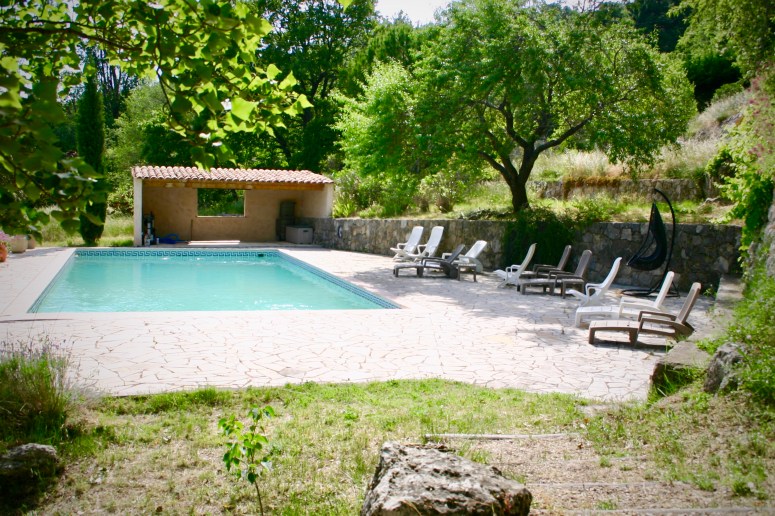
First , it is not because the water looks clear that it is also clean. Continuously you have to scoop of the dead insects that died in contact with the chorined water. And if you don’t see them floating on the water, you can be sure that the basket is full of them. Or maybe they made it out of the water, but for sure not far. It is not only terrible for the little creatures , but when you put some tablets in the basket and the chlorine takes on your breath, i can assure you that you understand that this pool is the opposite of a healthy refreshment. And yes there are also other options like a salt pool. Via Electrolysis you convert the salt into what do you guess? chlorine. The amount is less but never the less the result of dead animals the same. Furthermore considering the size of our pool and the location in full sun and surrounded by trees (that leaves a lot of leaves in the pool), the system is not effective anyway. A thirt option we tried for some time is active oxigen. It clears the water pretty well (if you can get at least 35% solution), you don’t have the bad smell and it is a pretty “natural” product. But also this was clear for me not the right way. All of these methodes is based on killing and it is a fight you never win.
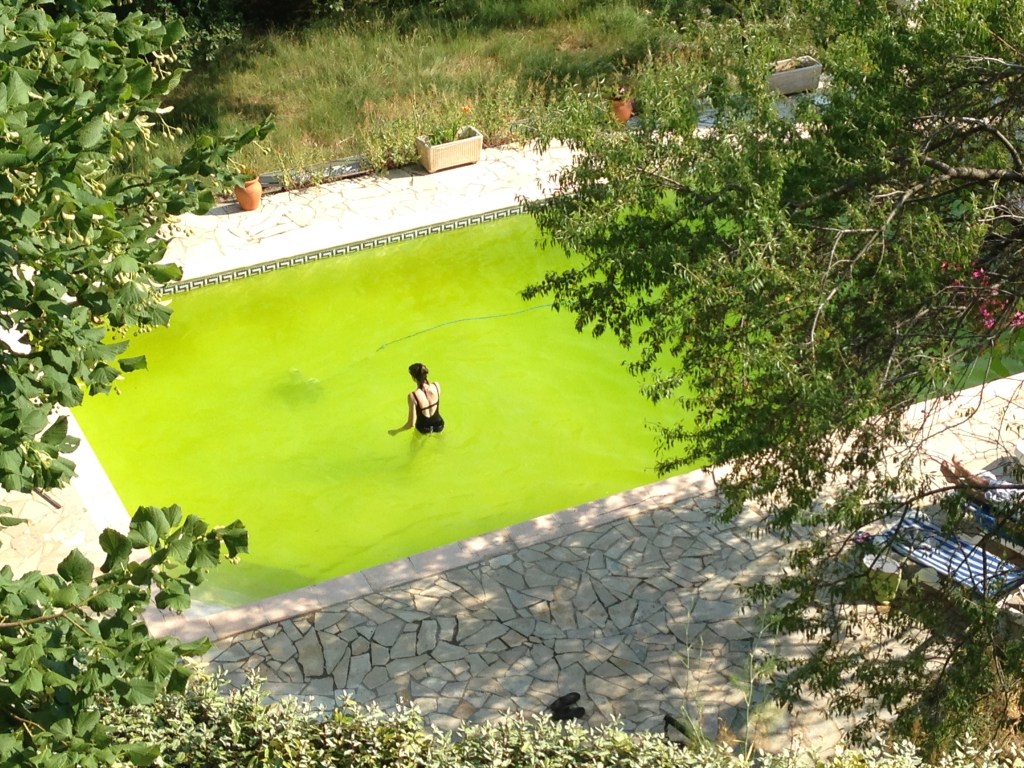
And besides that when the linden trees are in flower, no product can remove the nice yellow colour of the pollen :-). Did i also mentioned the amount of work cleaning up the pool every morning? So to make a long story short, this was not according to our philosophy of natural living, so over to a sustainable way…
Option one, shall we convert the swimming pool to a greenhouse? Not a bad idea, we just have to put a roof over it and we cultivate “under” the ground which keeps the temperature more steady. And we can create a nice sitting area surrounded by plants.
Or we keep the pool and create a relaxing waterparadise for all creatures? Finely we chose the last option. So began our project natural pool…
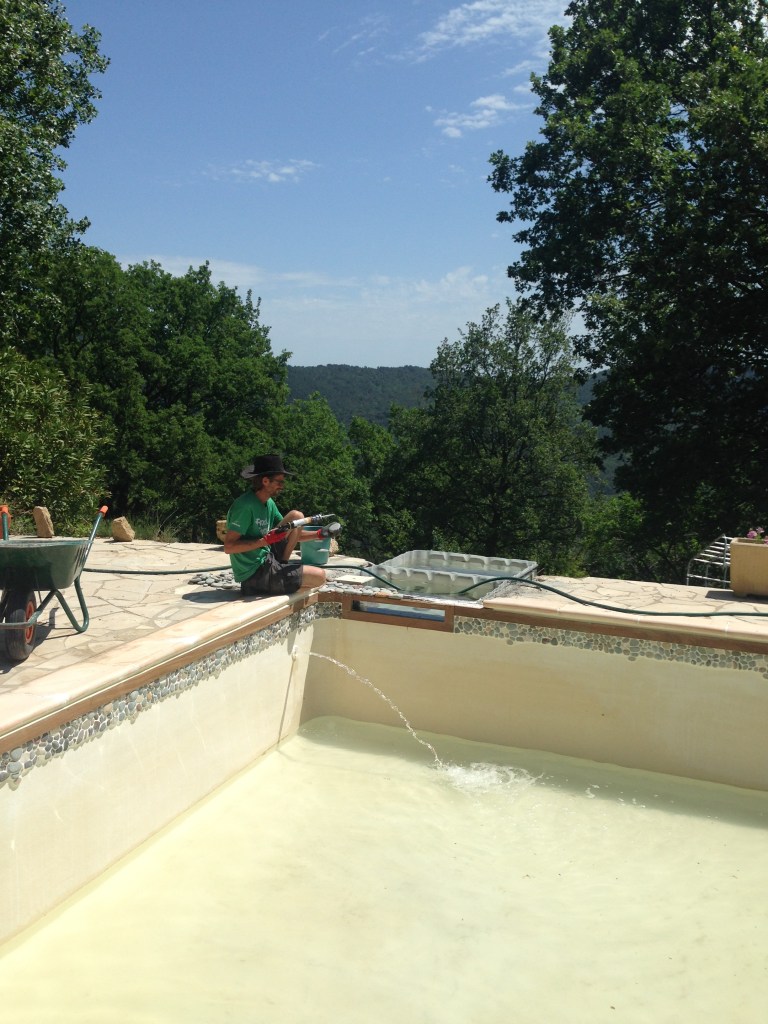
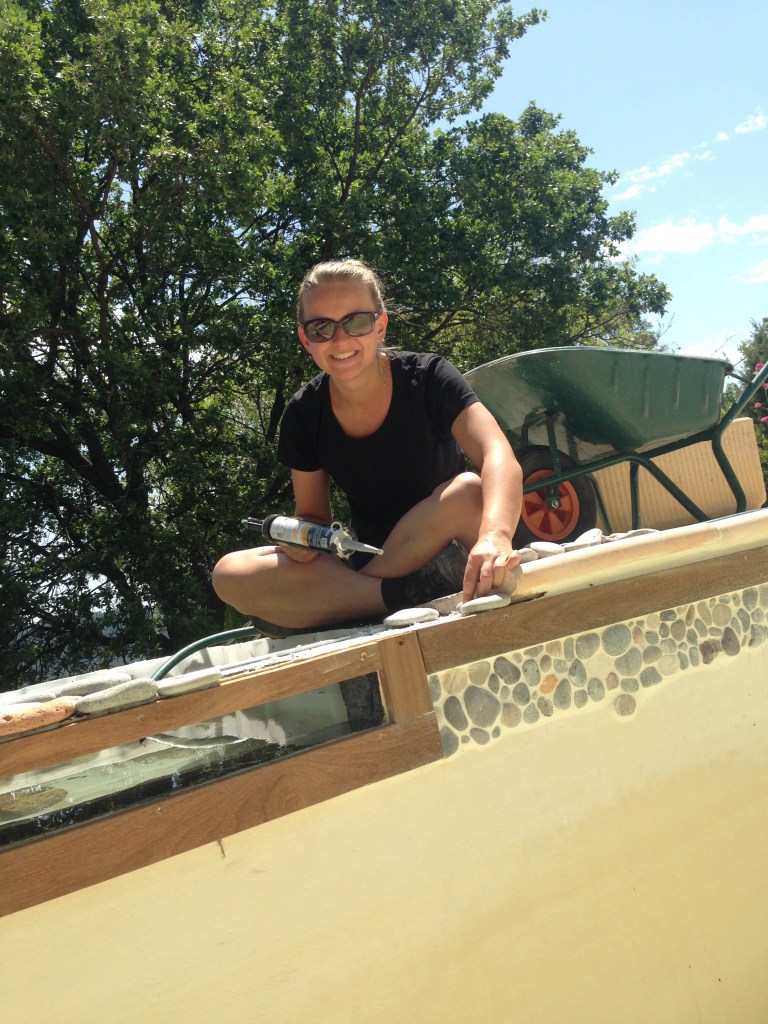
We studied for quite some time natural swimming ponds, bought some books and thank you very much David Pagan Butler for your funny but inspiring videos. First i dreamed about making a totally new concept with rounded angles and a bridge over the water to bring shade, but finally we kept it simple and efficient by keeping the old construction of the pool. To create filterbeds we cut a whole in the old construction and replaced the old tiles by pebbles. A lot of hours of labour in the provencial sun, but the end result looked pretty great.
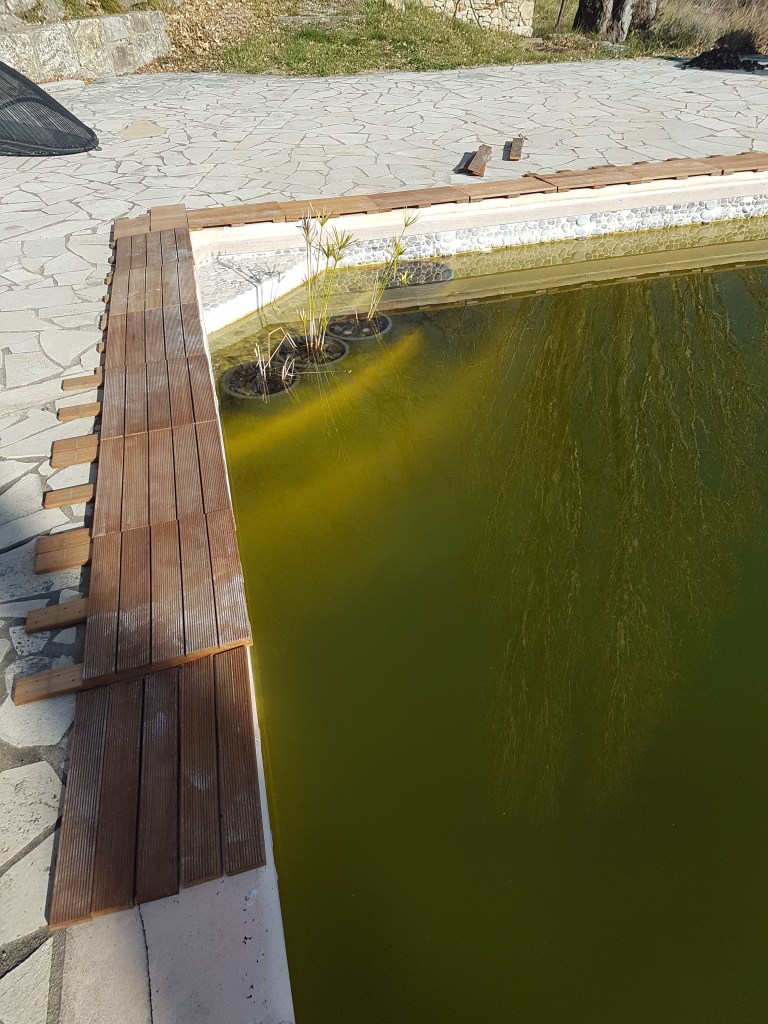
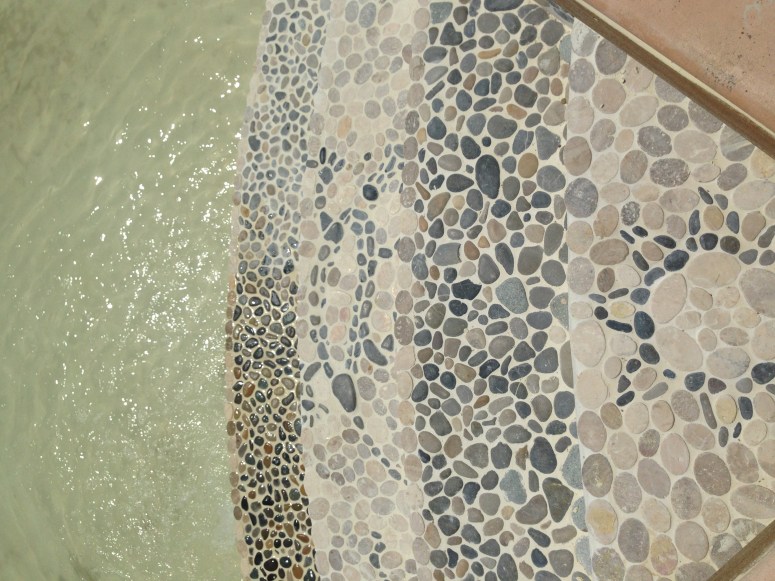
How does it exactly work?
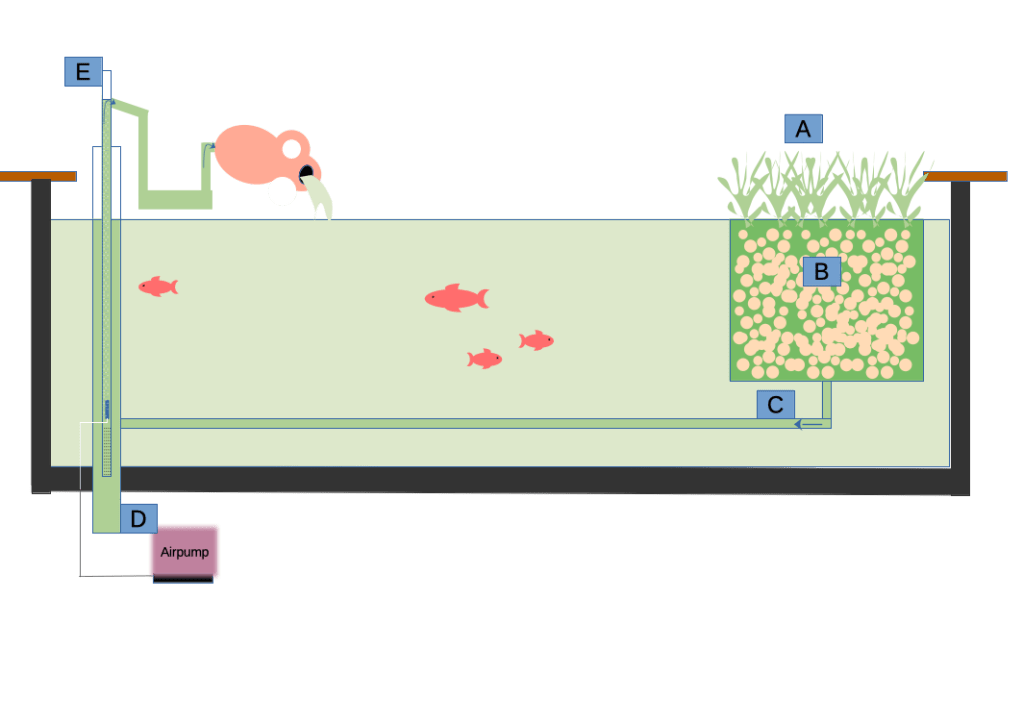
Via de outlet in the swimmingpool the water is pulled in a filterbed with plants (A), we also have floating islands in the pool with plants. In the first container there is a net installed to capture the leaves. The containers with the plants are filled with lave rock (B). From the filterbeds the water is pulled in pipes towards the pump system (D). The pumpsystem works on an 80 watt airpump : In a big pipe , there is a smaller pipe (E) with an airstone in it. The bubbles made by the airpump lift the water in the smaller pipe up to 30/40 cm higher then the level of the pool. With an overflow the water goes first down in a gethering pipe before it comes out in the vase. By doing this the flow of the water is constantly and not in pulses like we have at the overflow. Our pool is filled with fishies , although most natural pool books don’t recommend it, i shurely do.
The fish have multiple benefits : First they clean up the surface of the water (no insects or musquito larvae on the surface). Secondly they serve as your water quality measurement system. If the fish are vibrant and quick , your waterquality is excellent. They also provide somtimes a free skin treatement if you let them to.
What did we learn of this amazing experience?
- Green water is good : green is not only the color of algea but also of plankton which is your filter. An natural pool needs to find his balance. An intervention by us is mostly not beneficial and needs to be gentle and as least as possible : removing the leaves, brushing the leaves on the bottom to the deeper part, never do something where you try to kill one bacterie to benefit the other, add the good bacterie instead.
- The visibility of the water changes very rapidely , but don’t worry it always has something to do with more CO2 in the water. After a rainfall or with more CO2 in the air you can expect a changement in visibility. The visibility returns very quickely when cooling down the water.
- Deversity of insects and animals in and around the pool indicates good waterquality and is important to restore the balance. Even if the todds in spring lay 10000 eggs and 2000 toddlers are making the water more murky, there is always a preditor coming to help you restore the waterquality. Nature really does all the work for you.
- If your plants are not growing satisfactory, it indicates that your water doesn’t have so much nutricion for them. I also learned that you don’t have to buy fancy waterplants, just go to a nearby river or lake and introduce some of the thriving plants there to your pool, that often works miracles.
- If you help to keep balance now and then by adding beneficial bacteria like bactopool, you don’t need so many plants. In the future we want to create way more filterbeds, but in the meanwhile some good bacteria from now and then helps. By my observation of rivers and lakes, i want to create a filterbed where the water moves in waves and all wild variety of plants are doing the filtering, and you create areas for bees and other insects to drink during the hot summer.
 abriecosy.com